Buddleja davidii are the popular garden Butterfly Bushes and they need to be pruned at the right time.
We take you through the steps of pruning your Buddleia and explain why spring is the best time to prune.
This section is for the Buddleia davidii types only.
The Buddleia davidii are the proper ‘Butterfly Bushes’ though the others also attract butterflies – and bees etc.
If you don’t prune Buddleia each year, it will get out of hand and untidy – just like the wild ones that sprout up wherever they can.
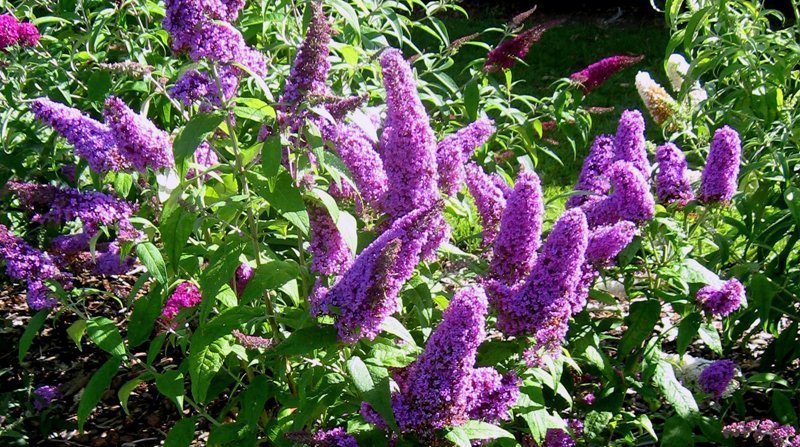
Incidentally, this rather plump healthy looking flower, is as a result of proper pruning of the Butterfly Bush.
Without pruning, the flower would have been smaller, and get progressively smaller as every season passes.
This group of shrubs flower on new growth made in the current year, so it is to your advantage to prune the shrub well to produce many flowering shoots.
These shoots that emerge as a result of properly pruning the Buddleja will have an upright, then arching habit of growth – totally unlike the ‘wild’ Buddleias that are seen on vacant building site – or growing out of walls!
When is the best time to Prune Buddleia?
The pruning these shrubs should take place early in the spring. March is normally ok and probably best time to prune.
The new shoots that have probably started to grow on your Buddleia are very hardy, and not normally prone to frost damage.
Better still if you prune before growth starts proper. If the new leaves have started to form – don’t worry, you can still carry out the pruning required.
How to Prune Buddleia
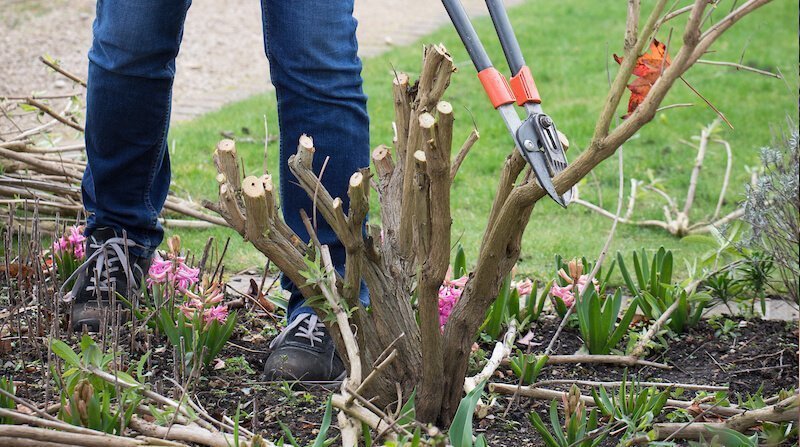
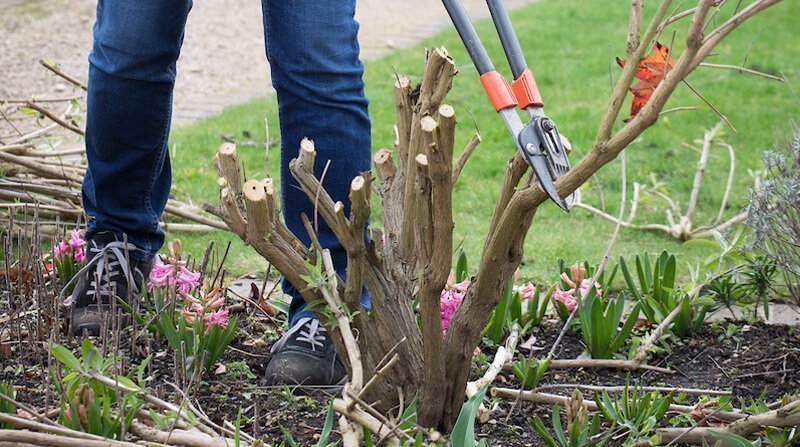
Prune the Buddleia down to around 30cm (12 in) from ground level. There may already be sprouting shoots on the Buddleia in a mild spring. This is not a problem, it just means you should Prune it back hard.
This will make the Butterfly Bush grow many new arching branches, that will have larger flowers than if it had not been pruned.
The scribbles in left sketch, show the old bush at the top, with suggested pruning height. Yes, the pruned Butterfly Bush will look like a stag’s antlers – but not for long.
Within a few weeks it will start into grow the give you a nice arching shrub, that will soon grow to around 6ft – 1.8 metres in a matter of a couple of months, and have fresh foliage and large flowers drooping the branches over to give a pleasing arching habit.
The new main stems will also send out some side shoots, which will also flower – but smaller flowers than the main tip end blooms.
Once you have finished pruning your Buddleia, you should end up with a framework of stems (stumps!) around 30-45cm from the ground.
For Buddleia bushes at the back of a large border, you can just cut back to around 60cm each year.
This will have the advantage of the flowering stems starting higher up and you will be able to plant other shrubs and perennials under or near to the base.
The arching stems of the butterfly bush will then be seen higher up at the back of the border.
Pruning Buddleia in Summer
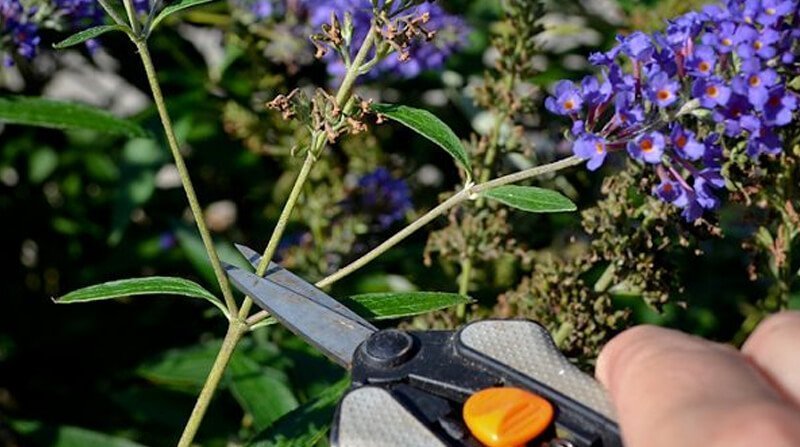
As well as this hard prune in the spring, it is also beneficial to prune off all the dead and faded flowers throughout the summer once the main flowering season is over.
Pruning Buddleia in Summer will be of benefit to the plant, not having to produce seeds on the old flowers and it will certainly extend the flowering season well into summer.
Take off all of the dead flowers regularly, and some varieties of butterfly bush will flower until well into the autumn.

