A lawn that turns brown in a UK heatwave is almost always dormant, not dead. It will green up again within a few weeks of the rain returning, usually by September.
Don't feed it and don't panic. Raise the mower, keep off it as much as you can, and either water it properly once a week or leave it to rest until the weather breaks.
Lasting damage after a hot summer is usually where something else was already wrong: thin patches, grubs or compacted soil. Fix those in September.
Why grass turns brown in hot, dry weather
When the soil runs short of water, grass goes dormant to protect itself. It draws its water and food back into the roots and lets the leaf die back, which is why the lawn turns straw-coloured.
It's a survival mechanism, not a sign the grass is dying. The roots of an established lawn survive, and when the rain comes the grass quickly springs back to life.
The Met Office calls it a heatwave when at least 3 days in a row reach a set temperature for your county. A lawn can brown in a week of that, or in a few weeks of warm, dry weather with no heatwave at all, especially on sandy soil or a lawn cut short.
Dormant or dead: how to tell
Look closely before you decide the lawn needs replacing. These checks take a couple of minutes:
- Tug a handful of grass. Dormant grass is anchored by its roots. Dead grass, or grass eaten by grubs, lifts straight away.
- Look at the base of the plant. Part the leaves: green or pale crowns and white roots mean it's alive.
- Water a small patch every day or two for a week. Dormant grass shows green shoots; dead grass doesn't change.
If the whole lawn browned evenly, it's drought. If you have separate patches that stay brown after watering while the rest recovers, look at these instead:
- Dry patch: soil that repels water, so the patch stays brown however much it rains; see dry patch
- Grubs: turf that lifts like a carpet, with birds digging; see grub damage vs fungus
- Dog urine: small brown circles with a dark green ring; see dog urine patches
- Red thread: pinkish, straggly patches, common in dry summers on hungry lawns; see red thread
What to do during a heatwave
Decide whether to water
You have two choices, and both are fine for an established lawn.
Water before it browns. A lawn needs about 2.5cm (1in) of water a week, from rain or a sprinkler. Water once a week, early in the morning, until a straight-sided container on the lawn has 2.5cm of water in it. That soaks the top 10 to 15cm of soil, where the roots are. My watering guide has a calculator for how long to run your sprinkler.
Or let it go dormant. Once it has turned brown, leave it. Watering a brown lawn now and then wakes the grass up only for it to dry out again, which stresses it more than staying dormant.
Whatever you choose, never water little and often. A daily sprinkle keeps the roots near the surface, where they dry out first.
Check for a hosepipe ban
Water companies can bring in a hosepipe ban (a Temporary Use Ban) in a long dry spell, and you can be fined for ignoring one. Check your water company's website before you start. Watering cans and stored rainwater are usually still allowed, but they're best kept for a new lawn.
Raise the mower and mow less
Raise the cutting height by a setting or two, and mow every 10 days or so instead of every week. Longer grass shades the soil and keeps more moisture in.
Never take more than a third off in one cut, and stop mowing altogether if the grass stops growing. Leave the clippings on the lawn if you can: they put moisture and goodness back into the soil. My guide on how high to cut grass gives the heights.
Don't feed it
Don't feed a lawn in drought unless you're watering it weekly. The high nitrogen in summer feeds can scorch dry grass and do more harm than good. Wait until the rain returns and the grass is growing again.
Keep off it
Brown grass is brittle, and a lawn in drought can't repair itself. Move the paddling pool, the trampoline and the football to another part of the garden, or move them every few days.
How to help the lawn recover
When the rain comes, the grass will quickly spring back to life. Most lawns look green again within a few weeks of steady rain.
Don't try to repair a drought-hit lawn in summer: it's too hot and dry for it to recover. Wait until September, when growing conditions are at their best:
- Wait for the lawn to green up so you can see what's actually dead.
- Rake out the dead grass and moss from any patches that didn't recover.
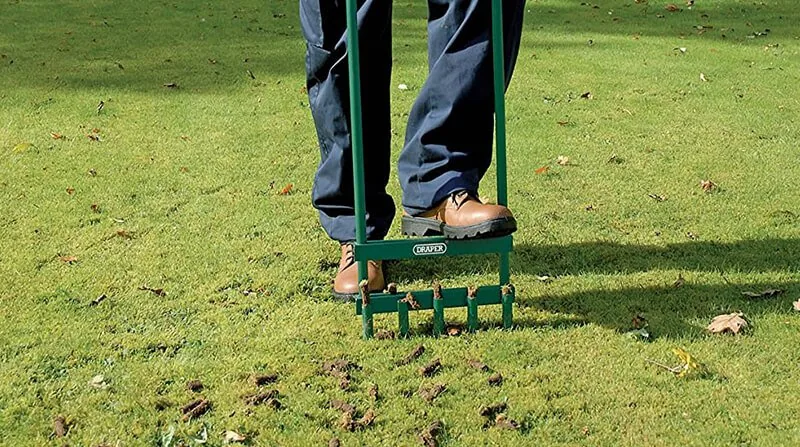
- Aerate compacted areas, which often brown first.
- Overseed the thin and bare patches, choosing a mix with drought-tolerant fescues if your lawn browns every summer.
- Apply an autumn feed once the repairs are done.
If you're doing a full autumn renovation, follow the order in my autumn lawn care guide.
How to make the lawn cope better next summer
A lawn with deep roots in open soil goes brown later and recovers faster. These habits help:
- Aerate every autumn, so water soaks in instead of running off
- Top dress with some organic matter, especially on sandy soil, so it holds more water; see top dressing
- Mow higher from June, and never cut the grass too short in summer
- Feed in spring and autumn, so the grass goes into summer strong
- Water deeply and rarely, if you water at all
FAQs
Will my brown lawn come back?
Almost certainly, if it's an established lawn and it browned evenly across the whole area. Dormant grass greens up within a few weeks of the rain returning. Patches that are still brown in late September may be dead, and need raking out and overseeding.
Should I water a brown lawn?
Once a lawn has gone brown, it's usually better to leave it until it rains. Watering now and then breaks dormancy and stresses the grass. If you do water, give it 2.5cm once a week and keep going until the weather breaks.
Can I feed a lawn in a heatwave?
No, unless you're watering it every week. A summer feed on dry grass can scorch it. Wait until the rain returns and the grass is growing, then feed in September.
How long does grass stay dormant?
As long as the dry weather lasts. Established cool-season grasses like ryegrass and fescues can stay dormant for several weeks in a UK summer and recover when the rain returns.
Read next: Lawn watering: why, when and how to water grass.