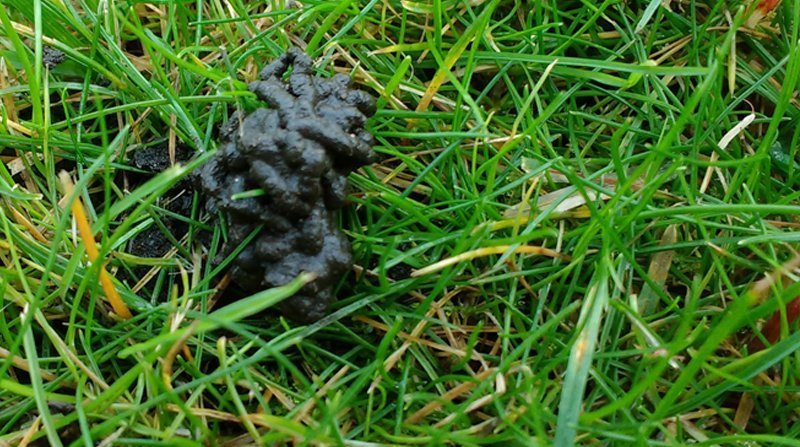
Is your lawn covered in worm casts?
Those little slimy piles of muck can really ruin the look of your lawn, especially in September/October when the weather starts to cool and the rains arrive.
But the fact is, earthworms are good for your lawn and provide more benefits than problems.
So what’s a lawn owner to do?
What Are Worm Casts and Why Are They a Problem?
There are around 27 species of earthworm in the UK. Out of these species, only three produce worm casts.
They are;
- Lob or Common Worms (Lumbricus terrestris)
- Grey Worms (Aporrectodea calignosa)
- Black-headed worms (Aporrectodea longa)
Of the three, the Lob, or Common Worm is the most common.
Worm casts are small masses of slimy, muddy soil that gets deposited on the surface of your lawn by these 3 species.
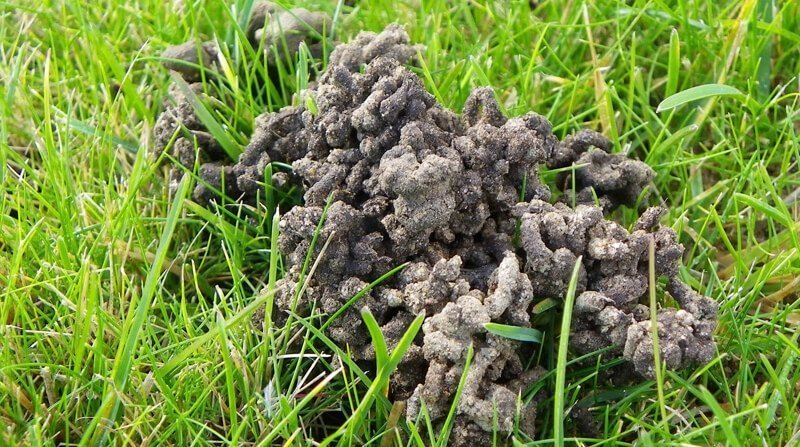
They’re the excreted remains of their diet.
Worm poo, if you like.
The slimy feel to them is the result of the worms digestive enzymes. These enzymes make them very fertile.
You’ll notice more and more worm casts appear as the temperatures start to cool and the rains arrive.
In the UK, this usually means September into October and right through into spring if we experience a mild winter.
As the soil becomes wetter, worms move to the surface to breathe, eat and reproduce – usually at night. It’s during these times when they leave their casts behind.
Problems Caused By Worm Castings
Worm casts don’t look nice.
If your grass is fairly long you might not really notice them. That said, they can be as tall as 60mm and on an ornamental lawn, they look awful.
And if you have a large population of worms in your lawn, they can completely ruin the appearance.
Their muddy, slimy composition also makes them difficult to remove without making a mess by smearing them over the grass.
Another problem is that worm casts are incredibly fertile. If you leave them, or if they get squashed and smeared by trampling feet or a lawn mower, they can become ideal places for weeds to establish themselves.
All that being said, worms provide a range of benefits and lawns with worms are much healthier than lawns without.
So, before I tell you how to reduce their numbers and activity, consider the following benefits.
The Benefits of Having Earthworms in Your Lawn
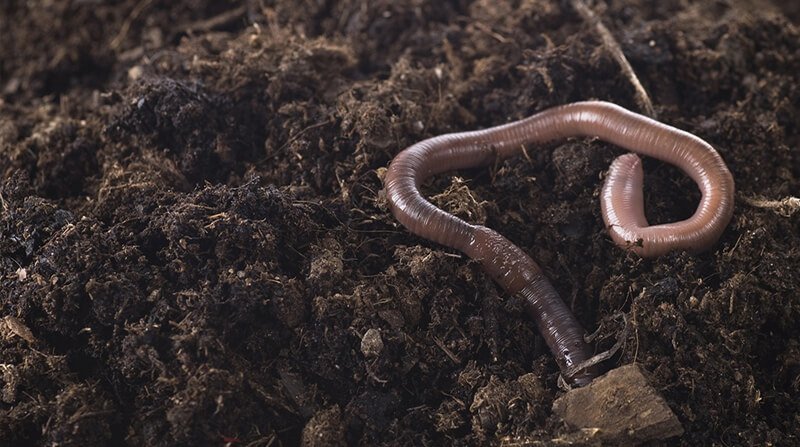
You could call worms ‘A pest with benefits’.
They live in the upper 30cm of the soil and provide more far benefits than problems;
Natural Soil Aerators
Worms are soils natural aerators.
They burrow through the soil extensively loosening it, relieving compaction and creating channels that not only help with drainage but also allow oxygen and nutrients to penetrate the soil.
All of which can then be absorbed and used by the grass.
Lawn Thatch and Disease Controllers
Worms ‘eat’ the soil and other organic material including lawn thatch, dead roots, grass clippings etc.
Not only does this help to keep lawn thatch under control, but it also helps to keep fungal diseases that develop in the thatch layer at bay. These diseases include:
Improve Nutrient Availability
As worms digest their food, the digestive enzymes concentrate the minerals and goodness which makes their excrement even richer in nutrients. In fact, worms can excrete 5 to 11 times more Nitrogen, Potassium and Phosphorus than they consume.
Only a tiny percentage of a worms excrement ends up as worm casts on your lawn. The vast majority of it stays below the surface.
This means all these nutrients are then available to be consumed by the grass.
Also, when worms die they decompose very quickly, adding even more Nitrogen to the soil.
How to Remove Worm Casts and Control Worm Activity in Your Lawn
Hopefully, I’ve convinced you that having worms in your lawn is actually a good thing.
However, the problem of removing their casts and controlling their activity remains. This is a two-pronged approach but let’s deal with the worm casts first.
Removing the Casts
I’ve found there are two ways to remove worm castings;
- Wait until they’re dry and either brush them back into the lawn or pick them up and crumble them into a powder and toss it back over the lawn.
- During wet periods it’s not always possible to wait for worm castings to dry. So, I go out daily, pick them up by hand and toss them in the compost bin. Using a tool like a hand trowels is futile as you can’t get in amongst the grass. I don’t wear gloves either as I have less dexterity, I use my bare hands.
Really, these are your only options.
Controlling Worm Activity in Your Lawn
In combination with removing their casts, you can take measures to control worm activity, reduce the number casts, and make them less visible.
Here are a few measures you can take;
Let the Grass Grow a Little Taller
The easiest way to mask the appearance of worm casts is to let the grass grow a little taller than you normally would.
As the seasons change into autumn, keep the grass at least 2 inches high. Worm casts will be much less visible amongst the taller grass.
However, you should still look for them and collect them up as when they appear.
Collect Grass Clippings and Fallen Leaves

Worms feed on organic matter including grass clipping and fallen leaves.
During the autumn make sure you collect up any grass clippings after cutting the grass and remove any fallen leaves. A garden vacuum is best for this job.
Worms will literally pull fallen leaves into their burrows so removing them will take away their food source from the surface of the lawn, helping to reduce surface feeding activity.
Keep Lawn Thatch Under Control
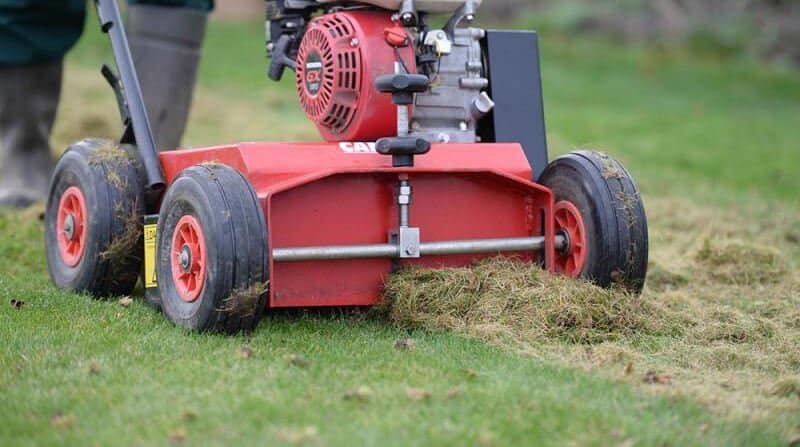
Worms feed on lawn thatch within the root zone of the grass.
The more thatch that’s present the more worms will come to feed on it. Scarify your lawn every couple of years to keep thatch levels from building up.
Avoid the Use of Organic Fertilisers and Compost
Organic lawn fertiliser and composts are the perfect worm food.
Spreading them over the surface of your lawn is sure to bring worms to the surface so they can feed on it.
Instead, use granular or liquid fertilisers.
Don’t Water the Lawn Excessively During the Summer Months
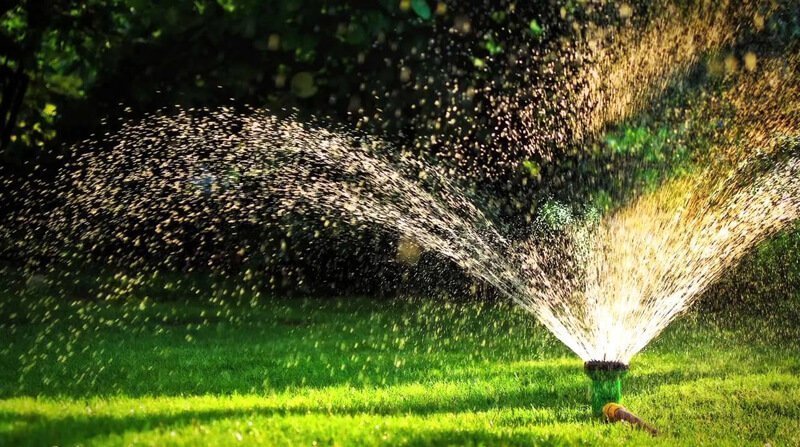
Worms live in moist soil.
During the dry summer months, worms will burrow deeper underground to get to where the soil is most.
If you water the lawn too much, your risk bringing them back to the surface.
Top Dress Your Lawn with A High Sand Content Top Dressing

Top dressing your lawn is for some, a part of their annual lawn care program.
You can use a top dressing mixture which contains a high sand content to lower the amount of moisture in the lawn. This will force them deeper underground.
It’ll also make the soil more abrasive which the worms won’t like!
Apply Iron Sulphate to Make the Soil More Acidic
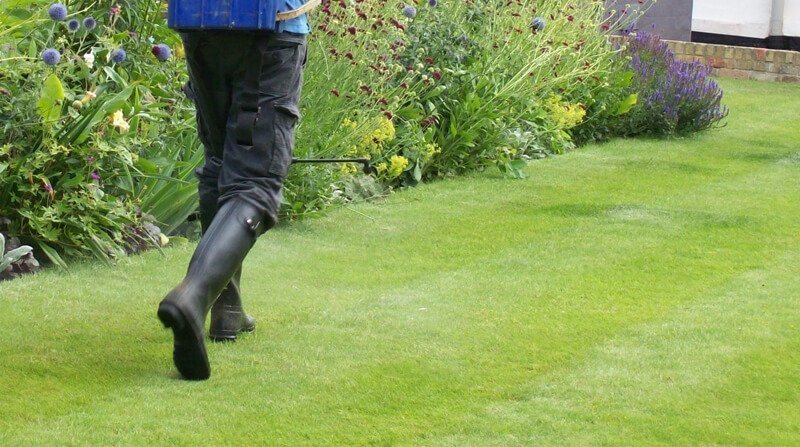
Worms don’t really like acidic soil so applying a dose of Iron Sulphate every 8-10 weeks will keep the soil on the acidic side. You can do this by applying lawn sand in the spring or liquid Iron Sulphate in the Autumn.
This, in turn, will force the worms to go deeper or find other areas of the garden where the soil is more palatable. It’ll also give the grass a boost of green colour as well as kill any moss that’s present.
No products found.
Apply a Worm Suppressant to Your Lawn
Worm killers are illegal, at least for non-professional use and in my opinion, worms shouldn’t be killed anyway.
Your opinion might be different.
However, the only product available for tackling worms is a product called Cast Clear.
It’s a surfactant product that contains nutrients that have been shown to reduce worm activity in the upper parts of the lawn. It then breaks down to natural nutrients which are then readily available for use by the grass.
No products found.
In Conclusion
The presence of worms in your lawn is a good thing and lawns that contain worms are much healthier than those without.
They provide many benefits but their worm casts can be a nuisance. A nuisance that we just have to deal with using the methods I’ve outlined in this article.
Over to You
Are worm casts ruining the look of your lawn?
How do you plan to deal with them? Or have you already sorted the problem?
I’d love to read about your experiences and what you plan to do about it. And, if you have any questions, leave a comment in the comments section below and I’ll be sure to reply.

