No, keep off a frosty or frozen lawn until the frost has lifted. Frozen grass is brittle and snaps underfoot, and every footprint can turn into a brown mark you'll still see weeks later.
The damage is rarely permanent. Most footprints grow out in spring, but a path worn across a frosty lawn all winter can leave a bare strip and invite disease.
If you have to cross the lawn every day, wait until mid-morning when the frost has gone, or put down a plank or a few stepping stones.
Why walking on frost damages grass
Each grass leaf is mostly water. When it freezes, the leaf goes stiff and brittle, and the weight of a foot cracks the frozen cells inside it.
A day or two later, the damaged leaves turn brown or black in the exact shape of your footprints. The marks can take weeks to disappear.
The grass can't repair itself in winter because it's barely growing below about 7°C. That's why a footprint made in December can still be there in February. Damaged, weakened grass is also more open to diseases like fusarium patch and snow mould.
When frost is likely
Frosts are most common from December to February, but a lawn can freeze any time from October to April, and in cold areas into May.
Don't rely on the forecast temperature alone. The Met Office explains that ground frost can form on grass even when the air stays above freezing. On a clear, calm night with the air forecast between 0°C and 4°C, expect frost on the lawn.
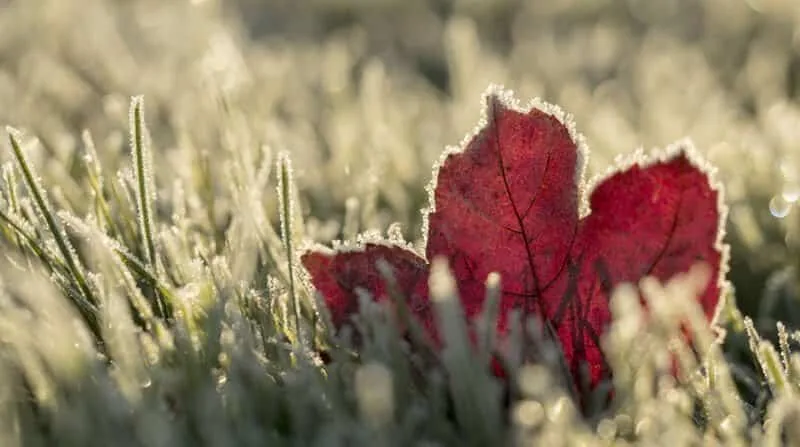
The simple test is to look: white, crunchy grass is frozen. If the frost has lifted but the ground is still frozen hard underneath, keep off that too.
How to look after the lawn in frosty weather
These habits keep frost damage to a minimum:
- Wait for the frost to lift before you walk on the lawn, usually by mid-morning on a sunny day, later in shade
- Use paths and patios for everyday routes, such as to the shed, the bins or the washing line
- Lay a plank or temporary stepping stones if you have to cross the lawn when it's frozen
- Never mow a frosty lawn, or one where frost is forecast that night
- Don't feed, scarify or aerate frozen ground; these jobs wait for spring
- Keep the children and dog on the patio on frosty mornings, if you can
If you need to clear leaves or worm casts, do it on a mild afternoon when the frost has gone; see leaves on the lawn.
Snow on the lawn
Snow itself doesn't harm grass, and a layer can even protect it from hard frost. Leave it to melt naturally.
Problems start when snow sits for a long time on one spot. Build your snowmen on the patio or hard ground: a snowman can take a long time to melt, and the grass under it is at risk of disease. Snow mould is the same disease as fusarium patch, but it shows after long periods of snow cover.
Keep salt and de-icer off the lawn when you clear paths. Salt scorches grass.
How to fix frost damage
Most brown footprints recover on their own once the grass starts growing again in March and April. Give them until mid-spring before doing anything.
If a patch or worn path is still brown or bare by April:
- Rake out the dead grass with a spring-tine rake.
- Loosen the surface with a fork, especially on a path that's been compacted.
- Sprinkle grass seed over the patch and rake it in lightly; see overseeding.
- Keep it moist until the seedlings are up, and keep off it while they establish.
If brown patches are spreading rather than staying in the shape of footprints, check for fusarium patch, which also shows in cold, wet weather.
A frosty new lawn
A lawn sown or turfed in autumn is more easily damaged than an established one, because the roots are still shallow. Keep off a new lawn completely in frosty weather, and don't lay turf on frozen ground.
My guide on laying turf explains when turf can and can't go down in winter.
FAQs
Is it bad to walk on frosty grass?
Yes. Frozen grass leaves are brittle, and walking on them breaks the cells inside. The damaged grass turns brown or black in the shape of your footprints, and the marks can take weeks to grow out because the grass barely grows in winter.
How long does frost damage on a lawn last?
Usually until the grass starts growing again in spring, so anything from a few weeks to 2 or 3 months. The footprints rarely kill the grass outright. Patches that are still bare in April can be raked and overseeded.
When can I walk on the lawn after a frost?
Once the frost has melted and the grass is no longer white or crunchy, usually by mid-morning on a sunny day. In shady spots it may stay frozen all day. If the ground underneath is still frozen hard, wait longer.
Can I mow the lawn after a frost?
Not on the same day, and never when frost is forecast. Wait for a dry, mild day when the ground is firm, set the mower high and just take the top off. See the last mow of the year for winter mowing.
Read next: Winter lawn care, for the few jobs worth doing from December to February.