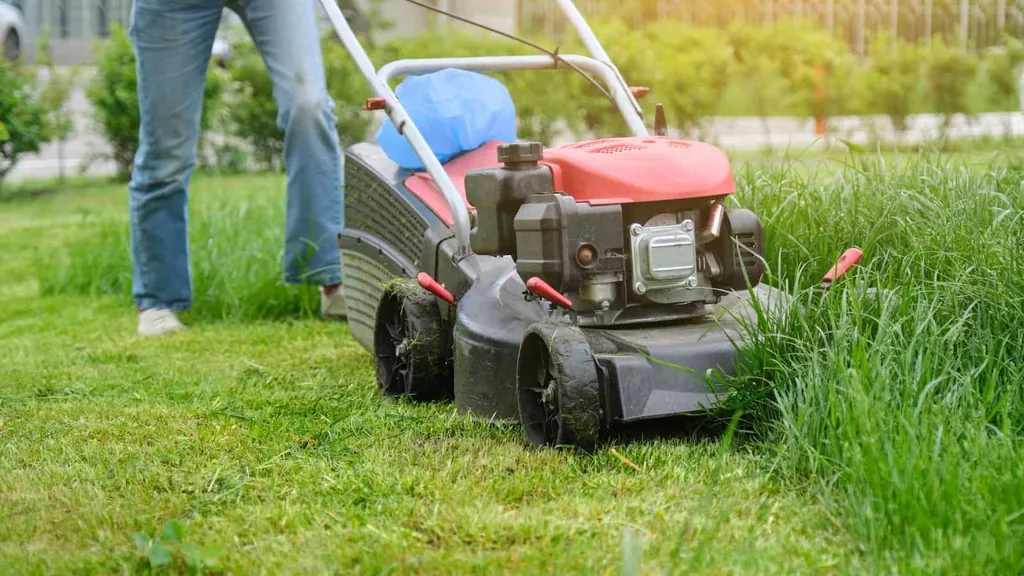
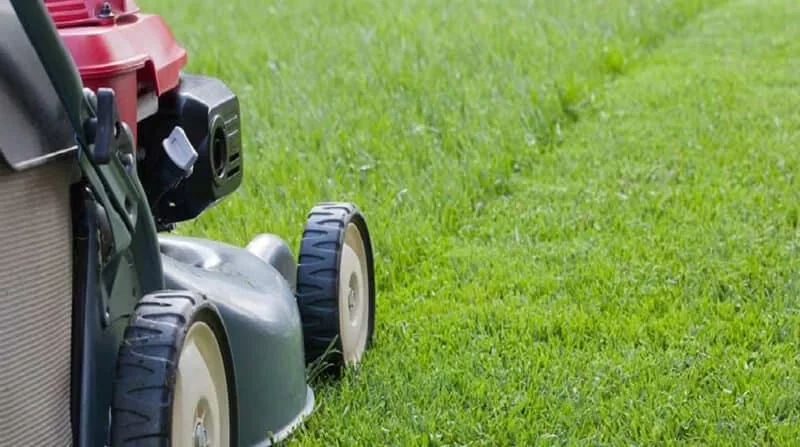
Give the lawn its last cut in October, or in November if the autumn is mild and the grass is still growing. Pick a dry day when it's neither frosty nor wet, and raise the mower a setting or two higher than your summer cut.
Don't scalp the lawn to save yourself a cut. Grass that goes into winter a little longer keeps more of its food store, so it comes through stronger and fights off moss and disease better.
When to do the last cut
Regular mowing all but stops in October, and for most lawns that's when the last cut of the year comes. The grass grows only slowly below about 7°C, so once the days stay cool it stops needing a cut.
In a mild year it may keep growing into November. If it does, give it one more cut on a day when the weather allows.
Mow only when all of these are true:
- The grass is dry: wet grass tears, clumps and clogs the mower (see cutting wet grass)
- The ground is firm: soft ground leaves ruts and compacts the soil
- There's no frost, and none forecast for that night
- The grass is still growing: if it hasn't grown since the last cut, leave it
How high to cut
Raise the mower a setting or two above your summer height for the last cuts of autumn.
For a family lawn that usually means somewhere around 4 to 5cm, at the top of the 3 to 5cm range on the gauge above. A fine, ornamental lawn can stay shorter, around 2cm.
Never take more than a third off in one cut. If the grass has got long since your last cut, bring it down over two cuts a few days apart rather than all at once. My guide to cutting long grass explains how.
Before the last cut
These jobs make the last cut easier and leave the lawn tidy for winter:
- Clear the leaves with a rake or the mower; see leaves on the lawn.
- Brush off worm casts once they're dry, so the mower doesn't smear them; see worm casts.
- Pick up sticks and stones that have dropped in the autumn winds.
- Trim the edges so they're neat for winter.
How to do the last cut
On a dry day with firm ground, cut it like this:
- Set the height a setting or two above your summer cut.
- Mow slowly, in your usual pattern, overlapping each row a little.
- Collect the clippings. In summer I'd leave them on the lawn, but in autumn they sit wet on the surface and feed the worms.
- Mow over any leaves that have fallen since, so the grass box picks them up.
- Don't cut too short in a low spot or on a bump. Raise the height again if the mower scalps.
After the last cut
Once the last cut is done:
- Clean the mower before you put it away, and book it in for a service; see how to service your mower
- Keep clearing leaves every week until the trees are bare
- Keep off the lawn when it's frosty or waterlogged; see walking on a frosty lawn
Mowing in winter
You don't have to stop completely. In a mild winter, grass keeps growing slowly, and your lawn doesn't have to look untidy just because it's winter.
If it needs it, give it a topping: no more than about 1cm off the top, with the mower on its highest setting. Only do it on a dry day when the ground is firm, and never when it's frosty or frost is due.
Common mistakes
These are the usual end-of-season mistakes:
- Scalping the lawn to "make the last cut last": short grass goes into winter weak and lets moss in
- Mowing frosty or wet grass: it tears the grass and leaves brown marks
- Leaving clippings on in autumn: they sit wet and encourage worms and disease
- Putting the mower away dirty: dried grass rusts the deck over winter
FAQs
When should I stop mowing the lawn in the UK?
Usually in October, or November in a mild year. Stop once the grass has stopped growing and the days stay cool. In a mild winter you can still take the top off now and then, on a dry day with the mower set high.
How short should the last cut of the year be?
A setting or two higher than your summer cut. For a family lawn that's usually 4 to 5cm. Never take off more than a third of the grass in one go.
Can I mow the lawn in November?
Yes, if the grass is still growing, the ground is firm and it's neither frosty nor wet. Set the mower high and just take the top off.
Should I leave the grass long over winter?
A little longer than in summer, yes. Longer grass keeps more of its food store and copes better with cold and wet weather. Don't let it get so long that it flops over, as that encourages disease.
Read next: How to service your lawn mower, the job for the winter months.